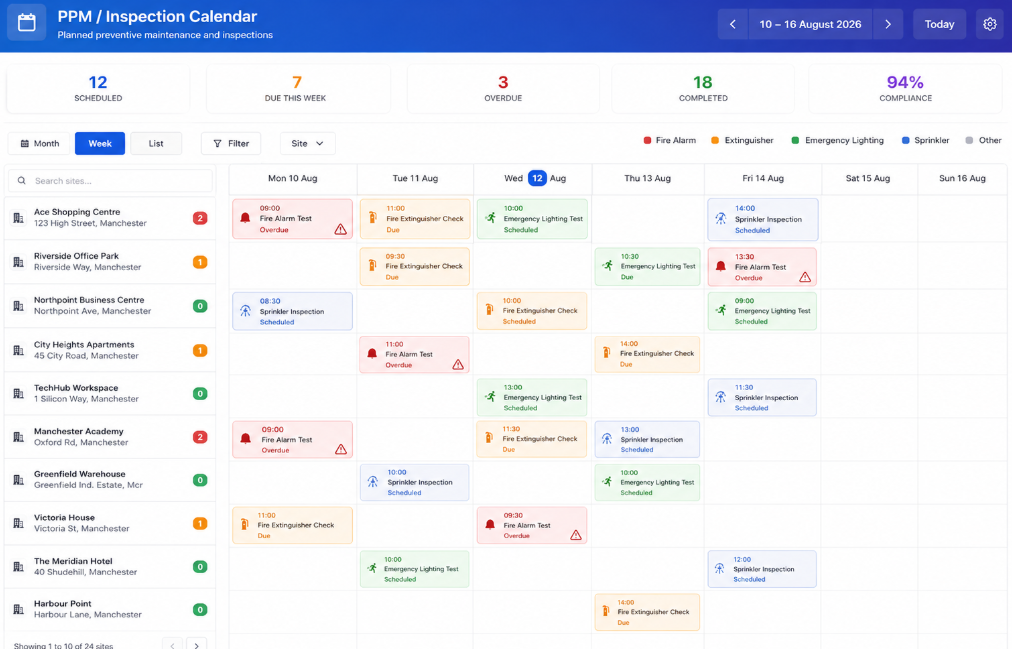
Fire protection software for UK contractors who service fire alarms, extinguishers, sprinklers and emergency lighting. Keep the inspection calendar, asset register and engineer check sheets in one field service system, instead of a van folder and a spreadsheet that nobody trusts on a Friday.
Dispatch callouts, log defects on the device, raise a remedial quote, then invoice from the same job. Field Ascend is field service scheduling software with PPM, work orders and an offline mobile app. It is not a standalone fire logbook and it is not a BAFE portal.
30-day free trial. All features included from £10 per user per month.
Fire protection software is field service software for contractors who inspect and maintain life safety systems. It holds recurring fire alarm servicing, extinguisher PPM, emergency lighting tests and sprinkler inspections against the right site, zone and asset, then gives engineers a mobile check sheet when they arrive.
Most fire protection firms do not struggle with knowing the work. They struggle with keeping it visible. A shopping park might have four fire alarm panels, two hundred extinguishers, emergency lighting on every floor and a sprinkler valve set in a locked riser. The contract says monthly, quarterly and annual visits. The client wants last month's evidence by Friday. If that sits in a van notebook and a shared spreadsheet, overdue work is already happening before anyone notices.
Life safety work is calendar-heavy. A missed monthly extinguisher visit or an overdue emergency lighting test is not just an admin gap. It is a contract risk and, on a serious site, a conversation you do not want with the facilities manager. The office needs overdue lists, engineer skill matching and a clean trail of photos, signatures and defects. PPM scheduling and equipment asset tracking sit underneath that, so each panel and each extinguisher keeps its own history instead of a generic "fire PPM" job note.
Field Ascend is built for that mix of planned visits and reactive callouts. Engineers use the mobile app in plant rooms with poor signal. Failed devices can move into a contractor quote without retyping the site notes. It stores inspection records. It does not issue BAFE certificates and it does not file returns to a fire authority on your behalf. Your accredited engineer still completes the certificate in the usual way.
If you already run electrical, HVAC or facilities work on the same sites, the same platform covers that too. Fire protection is one contract type inside a field service system, not a separate logbook that never talks to scheduling or invoices.
A typical UK fire contract is not one job. It is a pile of overlapping visits on the same sites. A care home group might want monthly extinguisher checks, quarterly fire alarm servicing to BS 5839, monthly emergency lighting function tests, an annual duration test that has to happen at night, and a sprinkler valve inspection that needs a key from estates. One missed round on one building is enough for the facilities manager to start asking whether anyone is actually looking after the systems.
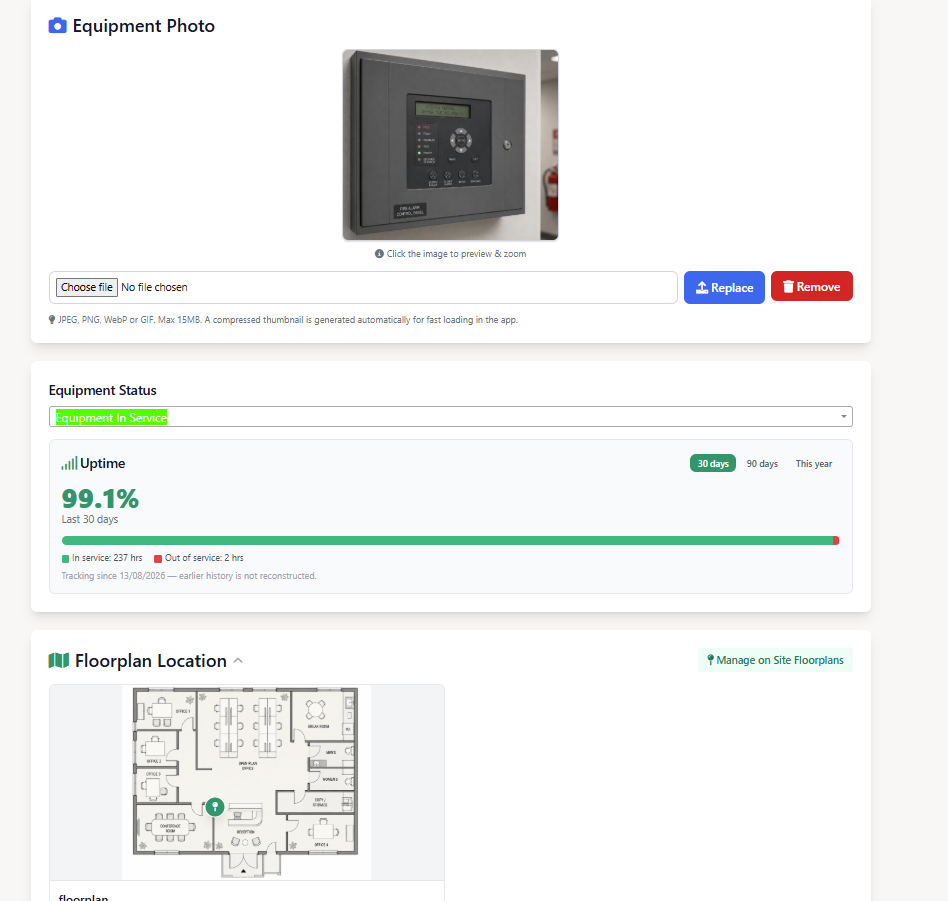
The asset list is rarely clean when you take the work on. The last contractor left a spreadsheet of 400 extinguishers. Half the references do not match the labels on the wall. Two panels were added during a refit and never made it onto the PPM. Field Ascend is useful here because each panel, detector loop, call point, extinguisher and luminaire can sit as its own asset against the site, with its own frequency, last visit and next due date. You do not have to pretend the client's list was perfect on day one. You load what you have, then engineers correct it as they walk the building.
Scheduling is the other half. Fire alarm engineers are not interchangeable with extinguisher route staff. Sprinkler pump tests need someone who knows the kit. Night duration tests need people who will actually turn up at 10pm. Field service scheduling lets the office book the right person, keep planned PPM away from a day's worth of fire alarm faults, and still see overdue work when a round slips. That is the difference between a contract you can defend and a diary full of "we'll catch it next month".
Clients also want evidence. Not a certificate generated by software that is not accredited to issue one. They want last month's visit dates, who attended, photos of failed devices and a list of open defects. When that lives on the job and the asset, the office can answer a Friday request without ringing three engineers. When it lives in notebooks, you already lost that conversation.
The engineer arrives, opens the job, and should already know the site rules: where the panel is, who holds the keys, whether a permit is needed before isolating, and what failed last time. Attach RAMS and access notes to the job so that is not a phone call from the car park. If you use QR codes on equipment, scanning the extinguisher or the panel opens the right check sheet instead of guessing which row on a paper list this device is.
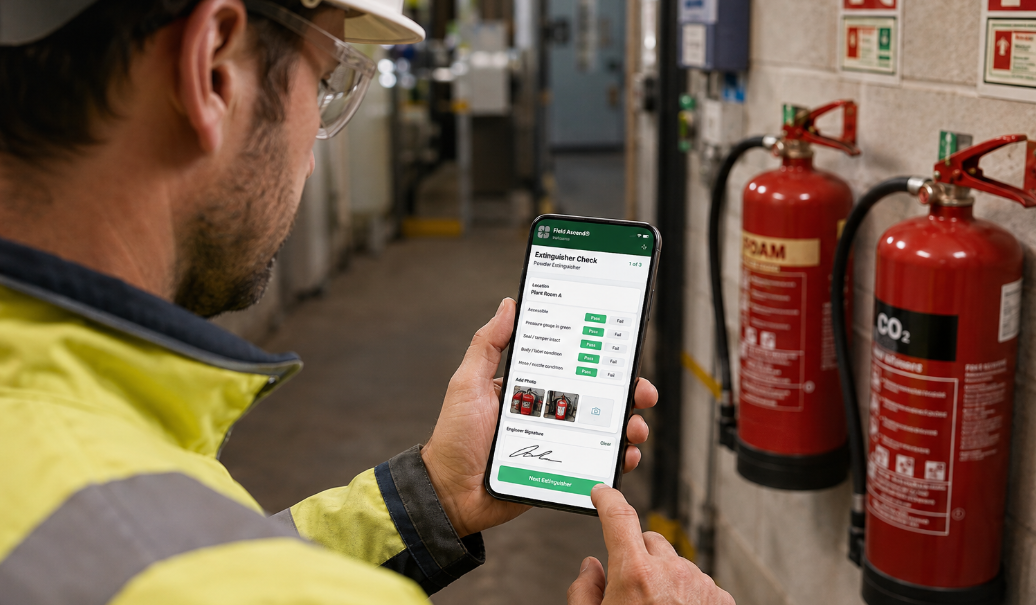
Plant rooms, risers and basement panels are where generic apps fall over. There is often no signal. The mobile app has to keep working while the engineer walks the building: pass/fail items, comments, photos of a smashed call point, a signature from the duty manager. Sync happens later, when they are back in the van. If the app needs a live connection to save the sheet, that visit will get written on paper and typed up on Monday, which is how defects disappear.
Emergency lighting duration tests and some fire alarm work happen out of hours. Those visits are often lone working. Pair the job with FSM lone working so the office still has a check-in, not just a completed form. The job record still needs the same photos and sheet. Night work does not get a lower standard of evidence just because nobody from the client is standing next to the engineer.
When something fails, it should stay on that asset. A leaking extinguisher, a detector in fault, a luminaire that did not last the duration test. The engineer logs it with a photo. That is the start of the remedial, not a sticky note that never becomes a quote. Field Ascend does not complete the BAFE certificate for you. It holds the inspection record so your accredited engineer has the visit trail when they fill the certificate in the usual way.
Office staff should not be rebuilding the week from WhatsApp photos. Completed visits show on the job. Overdue PPM stays on the board until it is booked. A fire alarm fault that came in at 4pm can be dispatched without knocking the next day's extinguisher round off the planner, as long as you can see who is already committed.
Defects should become money, or a clear "not proceeding", not a pile of unread emails. From the failed device on the job, raise a contractor quote, send it, then convert approval into a booked follow-up. The site notes, photos and asset stay attached. Nobody retypes "Level 3, east stair, call point CP-14" because that is how you quote the wrong device.
When the visit is done, invoicing should not be a second system. Completed servicing and approved remedial work can go to invoice from the same record, including a Xero push if that is how you run accounts. The client's question is usually simple: show me the last twelve months of visits on this site. If the calendar, the assets and the invoices all point at the same jobs, you can answer it. If they do not, you will spend the afternoon in Excel.
Mixed M&E firms feel this most. The same shopping park might have fire, electrical, HVAC and a generator contract. Running life safety in a separate logbook means the planner never sees the whole week. Field Ascend is the field operation for all of it. Fire protection is one contract type, with check sheets and frequencies that match that work, sitting next to the rest of the maintenance you already sell.
Use the same work order management and engineer dispatch tools as other trades, with records that match fire protection contracts. The difference is the calendar: monthly extinguishers, quarterly alarms, night duration tests and a callout that cannot wait until Thursday.
Set frequencies per asset or per site for weekly, monthly, quarterly and annual life safety visits. A shopping park can have extinguisher rounds on a different cycle to the fire alarm, and a night duration test that only happens once a year. Overdue fire alarm servicing stays on the board until it is booked, instead of vanishing into next month's pile.
Engineers complete pass/fail items, readings and comments on the phone while they walk the building. Pair this with QR code equipment tracking so scanning the extinguisher or the panel opens the right sheet. That is how you stop a route of 200 extinguishers being ticked off a paper list that never matched the labels.
Hold fire alarm panels, detectors, call points, extinguishers, emergency luminaires and sprinkler valves against the customer site, not a generic job note. When a detector in the east stair fails, it stays on that device with the photo and the date. The next engineer does not have to ask the office which panel it was.
Log a failed device with photos on the job. Office staff raise a remedial quote from that record, then convert approval into a booked follow-up visit. Nobody retypes "Level 3, east stair, call point CP-14" into a blank document, which is how the wrong device gets priced.
Field service scheduling software shows who is free and closest. Send a qualified fire alarm engineer to a panel in fault without knocking the next day's extinguisher round off the planner. Planned PPM and reactive cover have to live on the same board or one of them loses.
The mobile app keeps working in basements and risers. Check sheets, photos and signatures save on the phone and sync when the engineer is back on signal. If the app needs a live connection to keep the visit, that sheet will get written on paper and typed up on Monday.
Evening emergency lighting tests and plant-room callouts are often single-engineer jobs. Use FSM lone working alongside the job record so the office still has a check-in, not just a completed form. Night work does not get a lower standard of evidence.
Attach RAMS and site access notes so the engineer sees isolation, hot-work and permit rules before they start the inspection. That belongs on the job, not in a shared drive they cannot open from a car park.
Built for fire and life safety contractors, and for electrical or facilities firms that run fire systems as part of a wider maintenance contract.
Quarterly and annual panel tests, detector cleaning, cause-and-effect checks and callout cover across multi-site clients. The engineer needs last visit notes before they open the panel, and the office needs overdue servicing visible before the client chases it.
High-volume monthly and annual extinguisher routes, with scan-and-check workflows and failed-unit replacements. A retail contract can be hundreds of units across dozens of shops. If the list in the van does not match the labels on the wall, you will miss devices and only find out when the client audits you.
Valve inspections, pump tests and impairment notes kept against the system, not lost in a van folder. When a valve is isolated, that note has to sit on the asset so the next visit does not start from a blank page.
Monthly function tests and annual duration tests scheduled per building, with photos of failed luminaires. Duration tests often happen at night. The job still needs the same sheet, photos and a signature, plus a lone-working check-in if the engineer is on their own.
Electrical field service software teams that also hold fire alarm and emergency lighting contracts for the same sites. One planner, one asset register, instead of fire sitting in a separate spreadsheet the electricians never see.
CAFM software users who need life safety PPM inside the same field operation as HVAC and lifts. Facilities contracts fail when fire visits are tracked somewhere the rest of the maintenance is not.
One contract can include all of this on the same sites. The point is not a longer checklist. It is that each visit type has a frequency, an asset and a record, so you can show what was done without assembling it from three inboxes.
Field Ascend stores inspection records, photos, defects and follow-up quotes. It is not a BAFE portal. It does not issue BAFE certificates or file paperwork to a fire authority for you. Your accredited engineer still completes the certificate in the usual way. The software holds the visit trail they need, not a fake certificate generator.
PPM scheduling can follow the frequencies you already sell: weekly, monthly, quarterly, six-monthly and annual, per device type if you need that detail. Extinguishers do not have to share a cycle with the fire alarm just because they sit on the same site.
Engineers see previous defects, access notes and the last visit before they open the panel. That cuts the "what did we do last time?" call to the office, and it stops the same failed device being logged as new every quarter.
We are a UK company. Support talks in engineer, PPM and callout language, not a generic helpdesk script. If a night duration test is sitting overdue, you will not be asked to explain what a duration test is.
From £10 per user per month with core features included. No module tax for PPM, mobile check sheets or quoting. See pricing or start the trial.
The same platform covers HVAC and lift maintenance if you already run mixed M&E contracts. Fire does not need a second system that the planner cannot see.
Fire protection software is field service software for contractors who service fire alarms, extinguishers, sprinklers and emergency lighting. It holds the inspection calendar, asset register, check sheets, photos, defects and follow-up quotes in one place so office staff and engineers work from the same site record.
Yes. You can set recurring visits per asset or per site for fire alarm servicing, extinguisher PPM, emergency lighting tests and sprinkler inspections. Overdue work stays visible so contracts do not drift. See PPM scheduling for how recurring maintenance is set up.
No. Field Ascend stores inspection records, photos, defects and follow-up quotes. It is not a BAFE portal and does not issue BAFE certificates or file returns to a fire authority on your behalf. Your accredited engineer still completes the certificate in the usual way.
Yes. The mobile app works in plant rooms, risers and basements with poor signal. Engineers can open the job, complete the check sheet, add photos and collect a signature, then sync when they are back online.
Failed items and defects sit on the job and the asset. Office staff can raise a quote from that record, send it for approval, then convert the approved quote into a booked remedial job without retyping the site notes.
It is field service software. Fire protection teams use the same scheduling, engineer dispatch, work orders, PPM, quoting and invoicing tools as other trades, with asset history and check sheets suited to life safety contracts. Start from industries if you want the wider picture.
You can schedule the visits, hold the panel and device history, and complete check sheets on site. Field Ascend does not replace the servicing standard or issue a BS 5839 certificate. Your competent engineer still does the inspection and completes the certificate in the usual way. The software keeps the calendar, photos, defects and follow-up work attached to the site.
Yes. Set different frequencies on the same site, or on the fittings themselves if you track them as assets. Monthly function tests and annual duration tests can sit as separate recurring visits so one does not hide the other. Duration tests that happen at night are still jobs, with the same check sheet, photos and a lone-working check-in if the engineer is on their own.
Yes. Each site keeps its own assets, visit calendar and job history. A care home group or a retail estate can have hundreds of extinguishers and several panels, with different frequencies per building. When a facilities manager asks for last month's evidence, you pull it from the site record instead of ringing whoever was on that round.
Yes. Completed servicing and approved remedial work can go to invoice from the same job, then push to Xero if that is how you run accounts. The visit, the quote and the invoice should point at the same site and the same assets, not three copies of the address typed by hand.
Fire protection work often sits next to electrical, facilities and critical-power contracts.
Start a 30-day trial with scheduling, PPM, mobile check sheets and quoting included.
Start your free trial