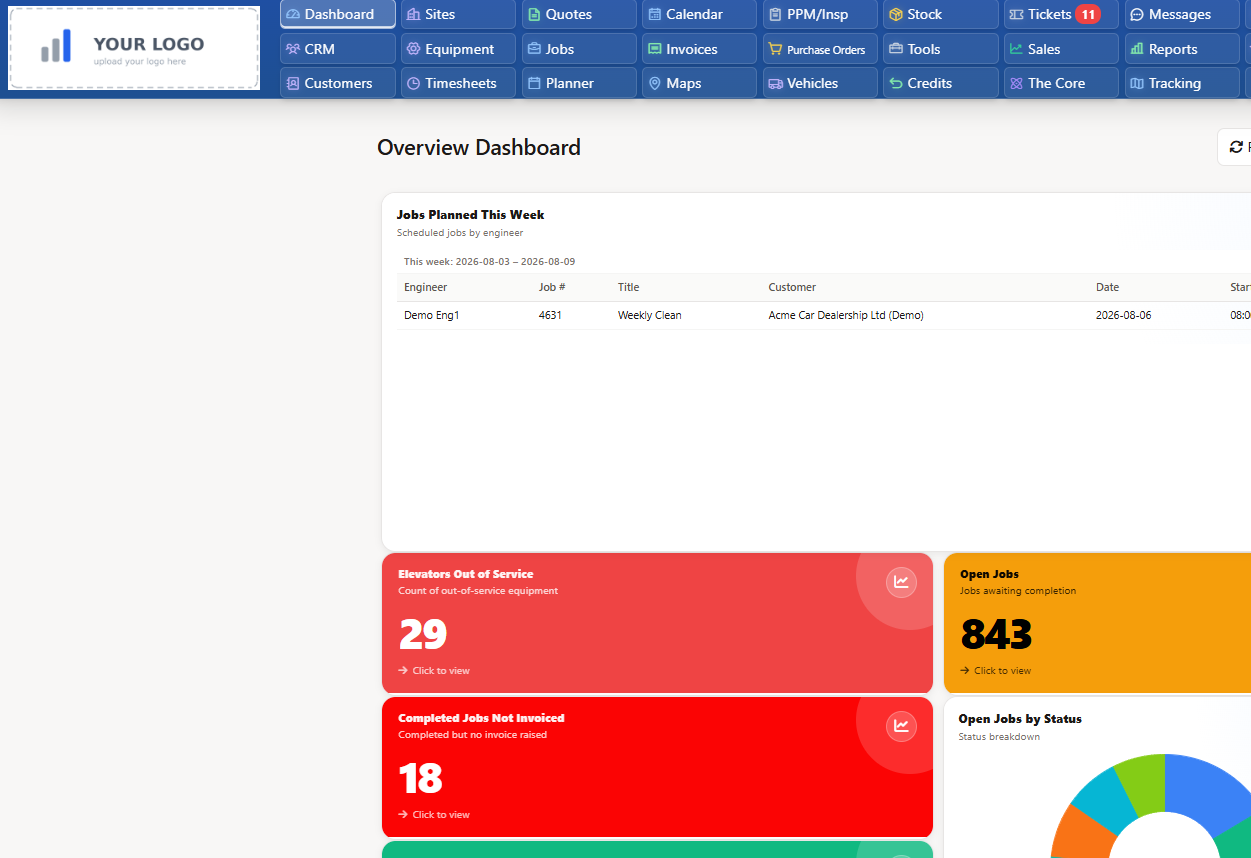
Contractor management software means three completely different products depending on who is selling it: HR platforms for paying 1099 workers, safety prequalification networks for industrial site operators, and operational systems that contracting businesses use to schedule, dispatch, evidence and invoice work - including work sent to subcontractors. Buy the wrong type and you lose a year. This guide separates the three, then shows how U.S. trade and service businesses run contractor work end to end.
30-day free trial · Access to standard product features
Search for this term and you'll find three unrelated product categories competing for your attention. They solve different problems for different buyers - and only one of them runs a contracting business day to day.
HR and payroll systems for onboarding, classifying and paying independent contractors and freelancers - often across borders. Built for HR and finance teams at large organizations with big 1099 workforces.
Buy this if: your problem is paying and onboarding hundreds of freelancers compliantly - not getting jobs done at customer sites.
Safety-led systems used by large industrial operators to vet the contractors working on their sites - certificates of insurance, EMR and OSHA records, inductions and permits. Contractors register because a client mandates it.
Buy this if: you're a large site operator vetting hundreds of external firms - or a client has told you which program to join.
Software that contracting and field service businesses use to run the work itself: schedule jobs, dispatch technicians or subcontractors, capture photos and signatures, track time and materials, and invoice. This is where Field Ascend sits.
Buy this if: you send people to customer sites and need the job, the evidence and the invoice connected.
| Type 1 - Workforce/Payroll | Type 2 - Prequalification | Type 3 - Operational | |
|---|---|---|---|
| Core question | "How do we pay this person compliantly?" | "Is this firm safe to let on site?" | "Is the job done, evidenced and invoiced?" |
| Typical buyer | HR / finance at large organizations | EHS teams at industrial operators | Owners and ops managers at contracting businesses |
| Unit of work | The worker and their contract | The document and the audit | The job, from booking to invoice |
| Field evidence | None | Safety forms only | Photos, notes, signatures, timesheets |
| Invoicing the client | No - pays workers, doesn't bill clients | No | Yes - connected to accounting software |
For a U.S. contracting business - HVAC, electrical, plumbing, elevator, facilities, multi-trade - contractor management software is the operational system that connects the office and the field. It overlaps heavily with field service management software: scheduling and dispatch, a mobile app for technicians, work order management, quoting, job costing and invoicing in one place instead of phone calls, paper job sheets and spreadsheets. If you're new to the category, our plain-English guide to what FSM software is covers the foundations.
Where "contractor management" earns its own name is the external dimension. Most contracting businesses don't deliver every job with their own W-2 staff. Work gets passed to subcontractors - the one-person shop you trust with overflow, the specialist firm you bring in for niche work, the regional sub who covers territories you can't reach economically. That work usually lives in email threads and text messages: no visibility, no evidence trail, and an invoice that arrives weeks later with nothing to check it against.
Proper contractor management software treats subcontracted jobs like your own jobs: dispatched with a scope, tracked through acceptance and completion, evidenced with photos and signatures, and connected to the money side - purchase orders for the cost, invoices for the revenue. One system, whether the person on site is on your payroll or not.
Contractor management starts with running your own operation well. Field Ascend gives the office scheduling and visibility, and gives technicians everything they need on site.
See the whole workload across technicians, days and sites. Drag-and-drop planning for reactive and planned work, with the right person matched to the right job.
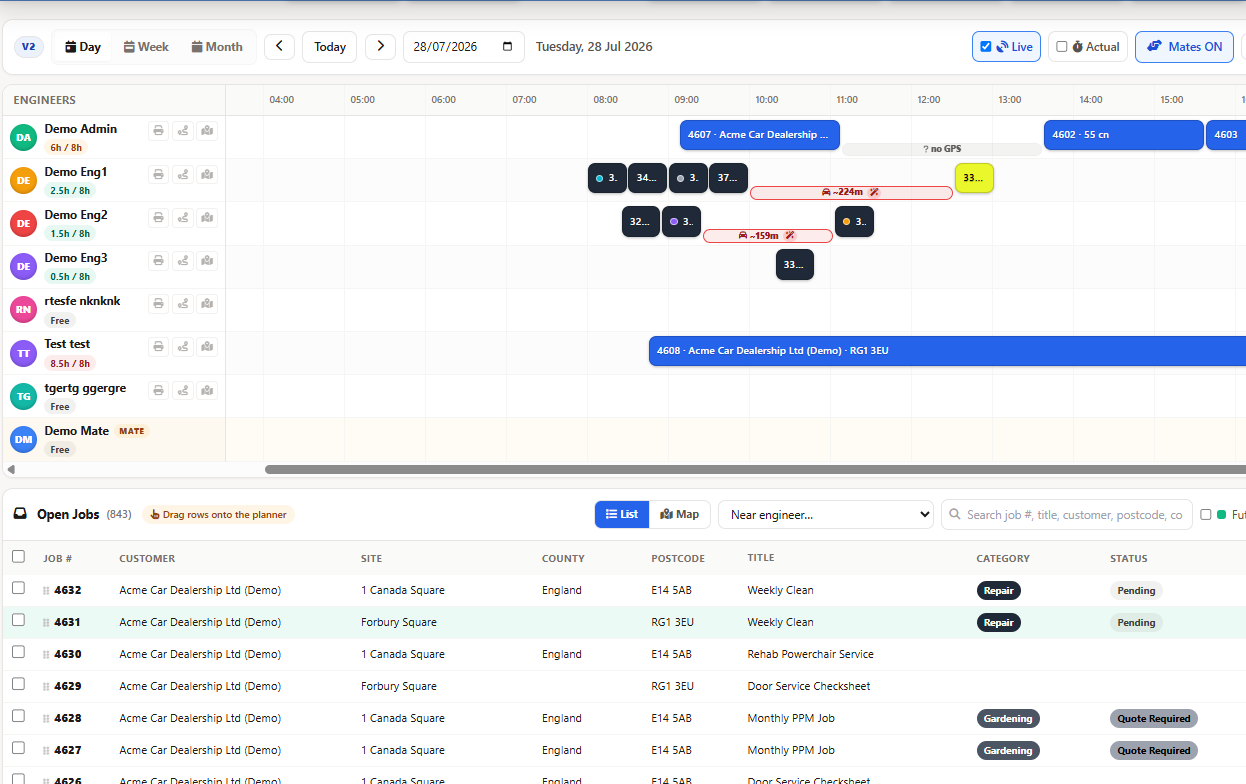
The offline-first mobile app gives technicians job details, checklists, photo capture, signatures and time logging - even in basements and mechanical rooms with no signal.
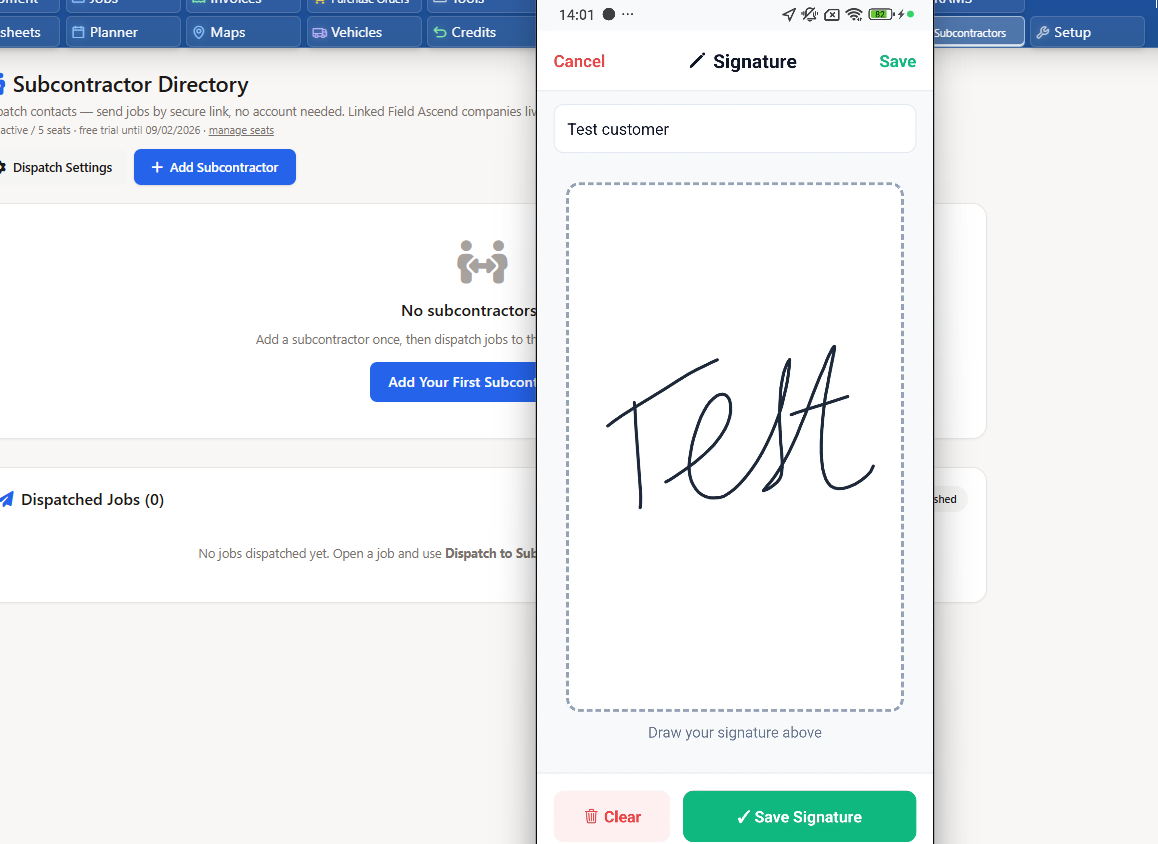
From quotes contractors can send from the field to completed jobs ready for billing, the money side stays attached to the work.
This is the part most software gets wrong. Subcontractors won't download your app, create an account or learn your system - so their work ends up in email. Field Ascend removes that barrier entirely.
Send a job to any subcontractor in your directory by secure email link. They open it on their phone, accept or decline, upload photos, add notes and sign off - with nothing to install and no password to remember.
See the full picture on our subcontractor management software page.
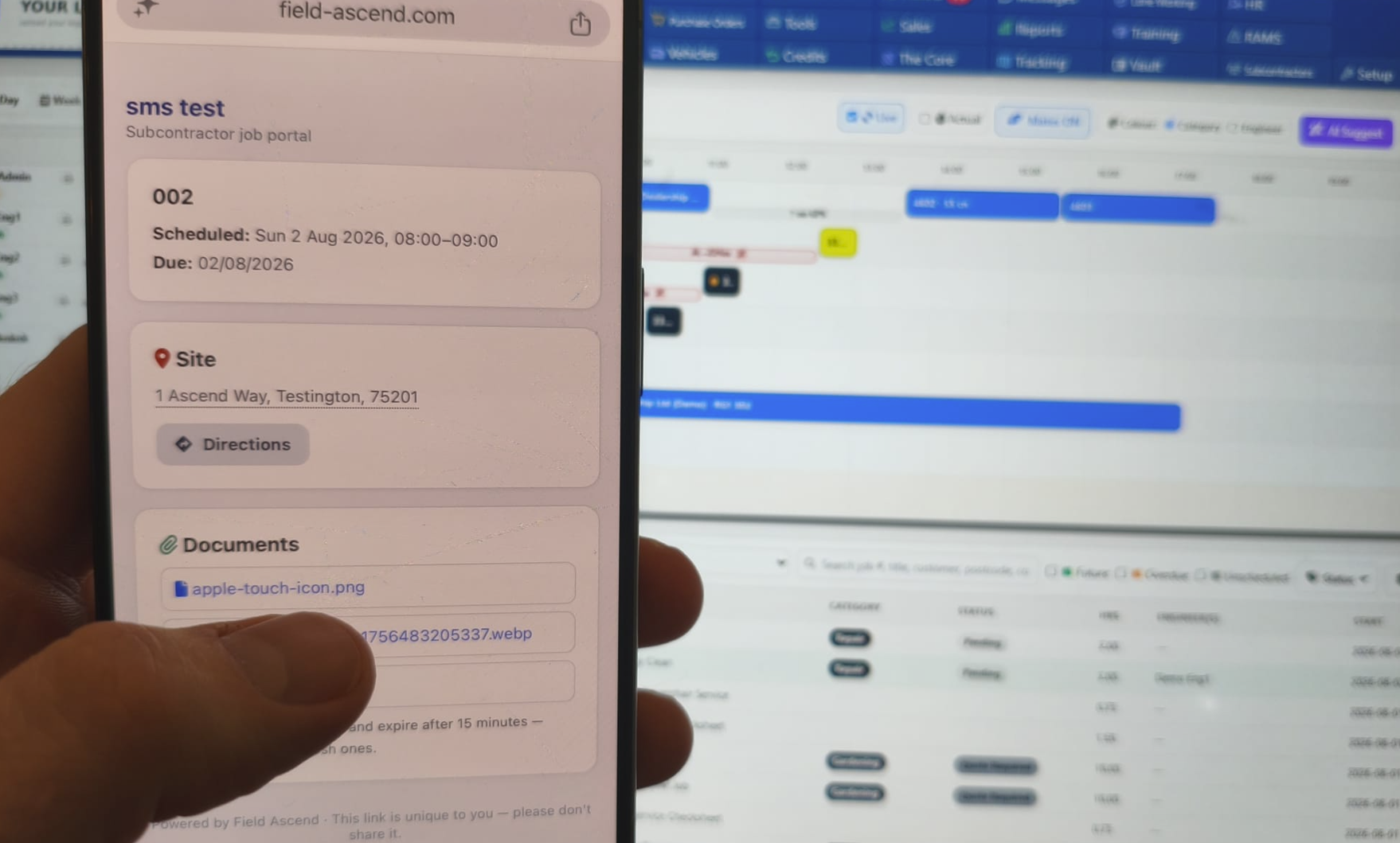
Subcontractors appear on the same planner as your own technicians, in their own lanes - so the office sees the whole week's delivery, not just the payroll half of it.
An honest note: Field Ascend is not a prequalification network and not a 1099 payroll tool. If a client mandates a specific compliance program, that requirement sits alongside your operational system - what Field Ascend fixes is the day-to-day chaos of dispatching, evidencing and paying for subcontracted work.
Evaluating contractor management software? Put these to every vendor. If you can't get a straight yes to most of them, you're looking at the wrong type of product.
Field Ascend answers yes to all ten - see features and pricing, or compare options in our buyer's guide.
Contractor management software fails when it's rolled out as a big-bang IT project. Do it in four weekly steps - inside the free trial.
Import customers, sites and price lists from spreadsheets. Set up job types and your technician list.
Schedule real work on the planner. The office runs the week in the system instead of the whiteboard.
Technicians complete jobs on the mobile app. Dispatch your first subcontractor jobs by secure link.
Completed jobs flow to invoices, POs cover subcontracted costs, and QuickBooks sync takes over the re-keying.
It's a system for organizing work done by contractors - scheduling jobs, dispatching them to internal technicians or external subcontractors, tracking progress, capturing evidence like photos and signatures, and getting completed work invoiced. The same term is also used for 1099 payroll platforms and for safety prequalification networks, which solve entirely different problems.
Type 1: contingent workforce software - HR and payroll platforms for onboarding and paying 1099 contractors. Type 2: compliance prequalification networks - safety programs large industrial operators use to vet contractors. Type 3: operational contractor management - software contracting businesses use to schedule, dispatch, evidence and invoice work. Most trade and service businesses need Type 3.
They overlap heavily. FSM software runs the day-to-day operations of a contracting business - scheduling, dispatch, mobile job completion, quoting and invoicing. Contractor management adds the external dimension: managing work you send to subcontractors as well as your own technicians. Field Ascend covers both in one system.
Not with Field Ascend. Jobs can be dispatched to external subcontractors by a secure email link. The subcontractor opens the link on their phone, accepts or declines, uploads photos, adds notes and signs off - no account, app download or password required. You review their submission before anything joins the official job record.
Yes. Subcontractor details and documents live in a central directory, so certificates of insurance, W-9s, licenses and contact records are in one place instead of email attachments. JSA and job safety documentation can be attached to jobs so evidence sits against the work it relates to.
No to both, and it doesn't pretend to be either. Prequalification networks are third-party programs large site operators mandate for vetting contractors, and 1099 payroll platforms handle worker classification and tax filings. Field Ascend is operational software for running contracting work day to day. If a client requires a specific program, that sits alongside your operational system, not instead of it.
Pricing models vary widely across the category - per user, per contractor, or enterprise quotes you have to request. Field Ascend starts at around $13 per user per month (billed in GBP) with no setup fee. See pricing details.
Yes. When dispatching a job to a subcontractor you can raise a linked purchase order at the same time, so the cost of subcontracted work is captured against the job from the start rather than reconciled from invoices later.
Yes. Field Ascend connects to QuickBooks so completed jobs flow to your accounting without re-keying, and supports sales tax handling on invoices for U.S. service businesses.
A typical rollout takes around 30 days: foundations in week one, office scheduling live in week two, technicians and subcontractors joining in week three, and the invoice loop closed in week four. The 30-day free trial means the whole rollout can happen before you pay anything.
Your technicians, your subcontractors, the evidence and the invoice - connected. Start your 30-day free trial.
Start Your Free Trial