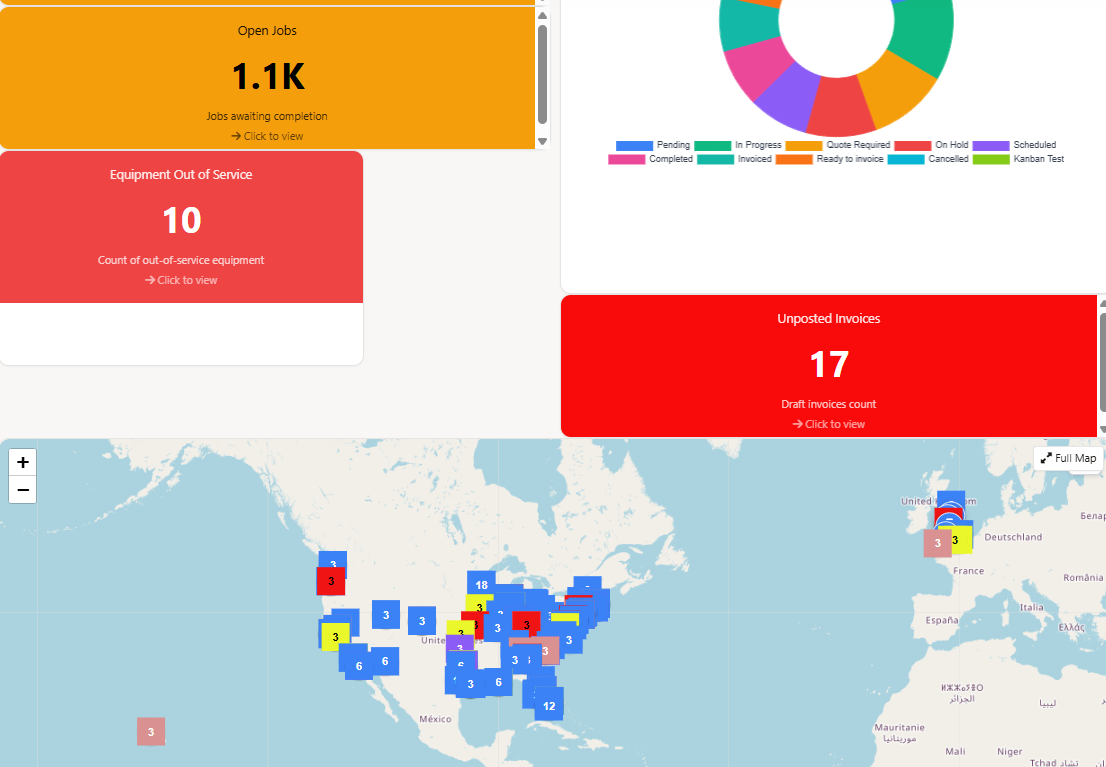
Recurring job templates keep contract work moving
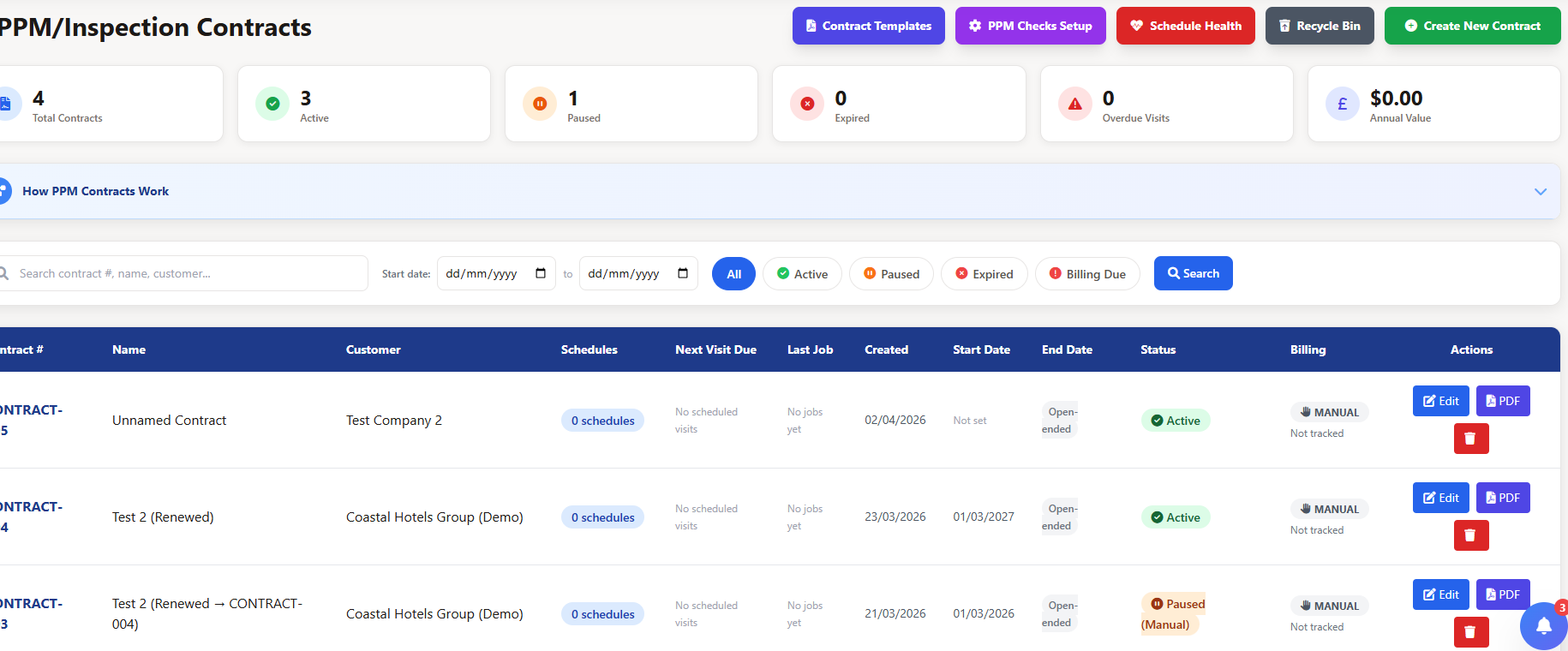
The contractor version of preventive maintenance software should let the office define schedules once and then trust the system to keep producing the right work. Recurring job templates matter because PM visits are not random appointments. They usually follow a contract cadence, a site rule, or an equipment requirement.
- Create recurring templates by frequency, site, and equipment type
- Auto-generate work from the schedule when a visit becomes due
- Keep planned visits in the same workflow as reactive work
- Preserve site and asset context for the technician before arrival
- When a Visit Comes Due defaults: Create job, Create quote, or Job + invoice (unavailable if the contract already invoices visits)
- Last done seeds the first visit one interval after the last completed date, not the contract start
On the contract, those due-action defaults sit behind the wording Use company default, so a schedule can follow the company rule or pick its own. Floating cadence sets the next due date after each completion. Last done is optional. Use it when you take over an existing contract and need to organize the first generated visit from the real last service, not from the day you opened the contract. Seasonal schedules ignore Last done.
That makes a big difference when your team is balancing contract PM work with reactive call-outs across HVAC, plumbing, and electrical work. The planned visit becomes part of the live schedule rather than an admin task that depends on memory.
Multi-site asset registers make the visit more useful
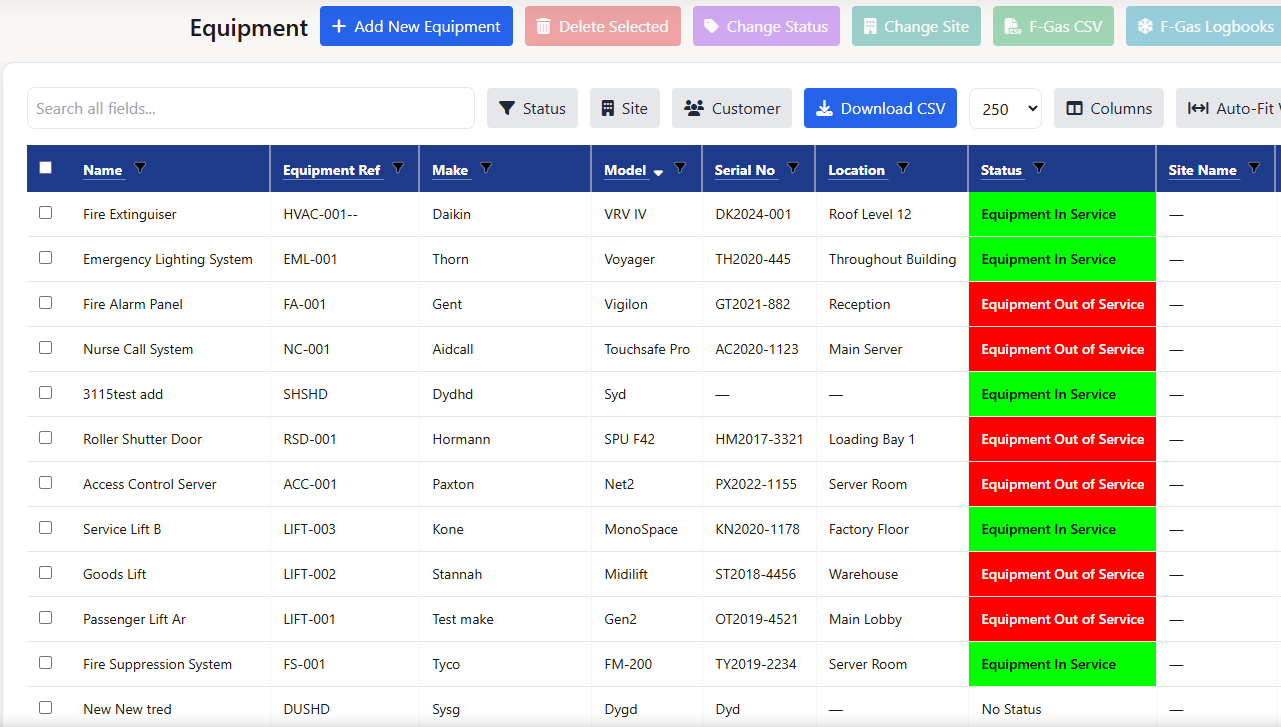
Contractors rarely just need the schedule. They also need the equipment record that explains what is being serviced, where it sits, what happened last time, and what still needs follow-up. Multi-site asset registers turn a planned visit into a better technical and commercial handoff.
- Hold asset records for equipment the contractor services but does not own
- Track service history and defects against the correct site and equipment item
- Support property portfolios, managed buildings, and repeat service estates
- Carry the right record into the field without another lookup step
This is where preventive maintenance software overlaps with CMMS software. The planned visit is more valuable when the technician sees the wider maintenance record, not just the next checklist.
Compliance-ready visit records should come back from the field
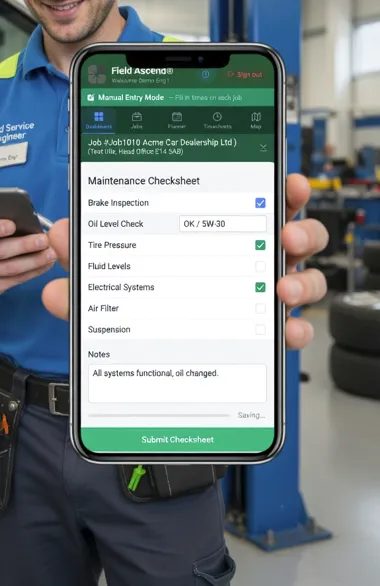
Planned maintenance is not just about attendance. Customers usually expect a structured visit outcome: what was inspected, what was found, who completed it, and what needs attention next. That is why the mobile workflow matters so much. The technician has to complete the planned visit in a way the office and the customer can actually use.
- Run maintenance checksheets from the mobile app
- Capture notes, photos, readings, and signatures in one record
- Work offline in plant rooms, rooftops, and low-signal spaces
- Produce a compliance-ready PDF report from the same visit data
That is also why planned maintenance software should connect back to work order software. The scheduled visit still needs to become a complete service record, not a disconnected checklist stored in a side tool.
Pass bands, auto defects, and Readings History
In Setup → PM Checks → Simple Builder, a Data table column can carry a Pass band and an optional Warn band. Calculated columns can use a band such as 0 – tol, with a constant the technician can adjust on the day. Cells color green, amber, or red as the numbers go in. The table gets a PASS, ADVISORY, or FAIL pill. Those colors print on the certificate, and the PDF Results Summary counts them.
- Set If out of range - log defect to Auto (created for the technician) and the defect files itself, tagged AUTO
- Correct the reading and the AUTO defect is withdrawn. Defects the technician logged by hand are never touched
- Existing checksheets stay as they are until you set a band
- The office form and PDFs color today. Phone coloring needs the latest app
On the equipment record, a Readings History card shows the latest value, outcome, trend, min and max, a sparkline, and a link to the job. On the app, an empty field shows Last: … ghost text from the previous visit.
Preventive maintenance billing should not be rebuilt manually
For a contractor, the real test of the software is what happens after the visit. If the office still has to piece together labor, completion notes, and contract detail before billing, the system is only solving half the workflow. Planned maintenance billing should be a handoff, not a reconstruction project.
- Visits can auto-generate work orders and move toward invoicing
- Batch billing supports many completed planned visits at once
- Contract work can still surface defects, quoted follow-ups, and exceptions
- PM contract profitability becomes easier to report by site, contract, and visit type
This is one of the clearest differences between contractor PM software and internal PM software. A contractor needs to understand whether the preventive maintenance contract is being delivered profitably, and whether the visit data is returning in a way the business can actually bill.