Field Service Software for Small Business

Field service software for small businesses is a cloud-based platform that schedules jobs, dispatches technicians, manages work orders, and invoices customers — built to scale a service operation without the per-tech pricing or feature gating of enterprise tools.

For a trade business that has outgrown spreadsheets, basic booking apps, or residential-only tools, the right system is not the one with the cheapest entry price. It is the one that still makes financial sense once you have office users, field users, commercial contracts, multi-site customers, and preventive maintenance work to manage.

Field Ascend is built for growing service operations that want flat, predictable software economics: $13 per user, all features included, no setup fee, and workflows that still fit when the business reaches 5 to 50 employees.

Built for office plus field teams. Not aimed at sole traders or one-person operations.

Why this page exists

  • Most small-business FSM pages talk about low entry pricing, not what the platform costs once you add dispatchers, estimators, and technicians.
  • Very few explain whether the software is actually built for a 3-person shop, a 15-tech commercial contractor, or a much larger enterprise team.
  • Almost none speak directly to commercial service workflows like PPM, multi-site clients, and contract-driven maintenance.
  • This page is written for trade businesses comparing platforms carefully before they overbuy or get boxed into a plan upgrade.

TL;DR

  • If you are a trade business with 3 to 50 staff, you need software that can support office roles and field roles at the same time.
  • The three biggest pricing traps are per-tech pricing, tiered feature gating, and onboarding or implementation fees.
  • Field Ascend is simpler to budget for: $13 per user, all features included, and no setup fee.
  • If you mainly serve commercial customers, make sure your shortlist can handle preventive maintenance, contract work, multi-site customers, and better visibility across the entire workflow.
  • For a broader shortlist framework, read the best field service management software buyer guide.

Who this page is for

This page is for you if: you're a trade BUSINESS with 3-50 staff, you have office + field roles, and you're servicing commercial OR residential clients.

  • You have dispatch, admin, estimating, or management work happening in the office as well as technicians in the field.
  • You need a work order system, better scheduling, and faster invoicing in one platform instead of stitched-together tools.
  • You may be a commercial contractor, a mixed commercial/residential operator, or a small contractor moving into higher-value service agreements.
  • You want software that still fits at 5 to 50 employees, not just a cheap starting tier for one or two users.

It is not aimed at sole traders. If you are a one-person operation looking only for a simple diary replacement, there are cheaper lightweight tools. This page is for businesses that are already coordinating multiple people and want something they will not outgrow as soon as they hire the next technician or dispatcher.

What size business is this actually for?

That question is missing from most competitor pages, but it matters more than any headline discount. The best FSM software for small business is not the one with the lowest advertised entry point. It is the one that fits the structure of your business today and still works when you add a dispatcher, another estimator, or another crew.

Good fit

Field Ascend fits growing trade businesses with 3 to 50 staff, especially when the team includes both office and field users. That includes HVAC, plumbing, electrical, facilities, and mixed service contractors handling reactive work plus contract maintenance. If your business is already balancing job intake, planning, field updates, quote follow-up, and invoice lag, you will feel the difference quickly.

Why the commercial angle matters

Once a small business reaches three or more technicians, the work often changes. You win more commercial sites, service more than one location for the same customer, and start taking on scheduled maintenance. That is why the shortlist needs to cover a connected field service software platform with scheduling, dispatch workflows, work orders, invoicing, and asset-linked service history instead of stopping at appointment booking.
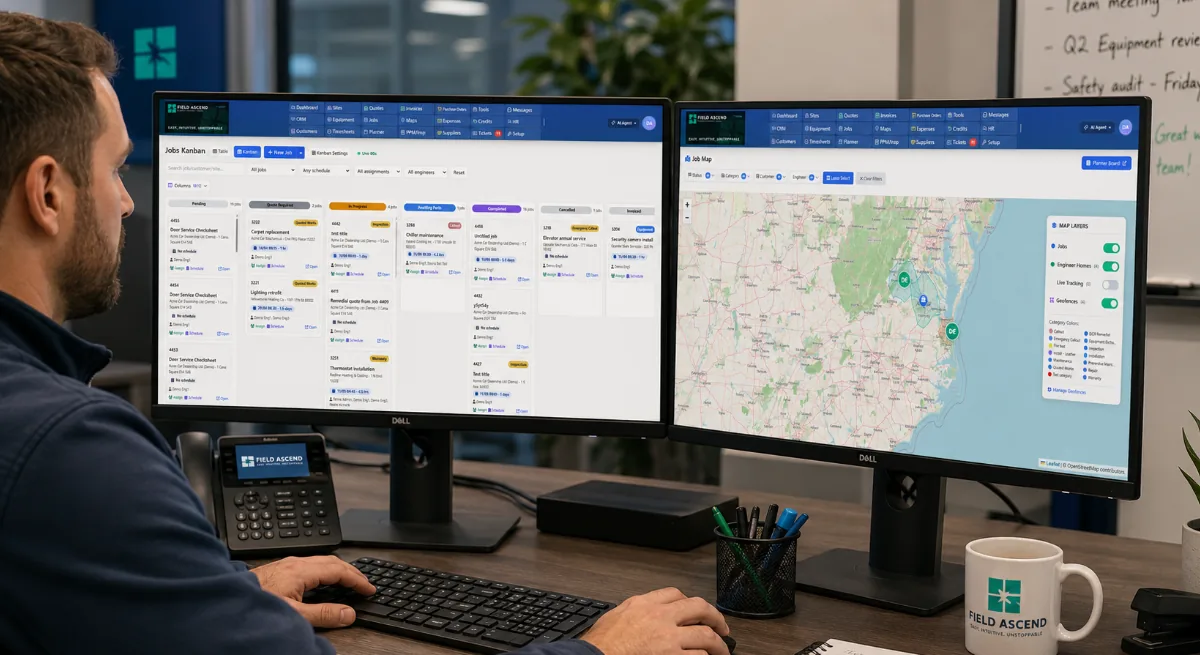
Field Ascend scheduling dashboard for a small US field service business showing technician schedules, open jobs and planned work the office can run

One scheduling view the office and field share — built for trade businesses with 3 to 50 staff.

Cheap tools vs per-tech suites vs Field Ascend

The problem is usually not that software looks expensive on day one. The problem is how the bill changes as the team grows and more parts of the workflow move into the platform.

Compare Cheap tools / entry tiers Mid-market / per-user growth pain Field Ascend
What they optimize for Fast sign-up, low advertised starting point, solo or very small crew use. Broader FSM workflow, but cost rises once dispatchers, office users, and extra techs need access. Predictable pricing for trade businesses with office and field roles already in play.
Published pricing examples Jobber Core from $29/month annual for 1 user. Housecall Pro Basic from $59/month annual. Workiz Lite is free but capped. Jobber Connect Teams from $124/month annual for 5 users plus $29 per added user. Housecall Pro Essentials from $149/month annual for 5 users plus $35 per added user. Workiz Standard from $275/month annual for 5 users. FieldPulse uses demo-led pricing. ServiceTitan uses custom per-technician pricing. $13 per user per month, all features included, no setup fee.
Where they usually pinch Advanced reporting, PM workflows, QuickBooks sync, or office-user collaboration may sit above the cheapest tier. Every extra dispatcher, coordinator, estimator, or technician increases monthly cost. Some features still sit behind higher plans. No premium tier for the core workflow. No per-tech pricing. No forced jump to unlock day-to-day operations.
Better for Sole operators and tiny crews that just need calendar plus invoice basics. Businesses that accept user-based scaling costs and custom onboarding discussions. Small contractors and commercial service teams that want one stack from scheduling through billing without overbuying.

Prices as listed on vendor sites, April 23, 2026. FieldPulse and ServiceTitan pricing remain sales-led or custom-quote-led on their public pages, which is part of the evaluation problem for small businesses trying to budget in advance.

5 users
$65/mo

One dispatcher, one office user, three field users. This is where many "cheap" tools stop looking cheap if the feature you need sits in the next tier.

15 users
$195/mo

Enough room for office plus field without having to rework the software budget every time you hire another technician or coordinator.

30 users
$390/mo

Still flat and transparent. The cost rises with headcount, but not with hidden module unlocks or implementation packages.

Trap 1: Per-tech pricing that punishes growth

Small businesses do not only add technicians. They add dispatchers, office admins, project coordinators, account managers, and sometimes subcontractor visibility. Pricing that looks fine for three logins can feel very different at eight, twelve, or twenty.

What happens

The software bill becomes a hiring tax

When a platform charges a premium every time another person needs access, the software starts pushing back against growth. That is especially painful for a small business where one new office hire can improve service quality and billing speed immediately.

Why it matters

Commercial workflows need more logins

A commercial contractor is not just adding bodies in the field. You often need site coordinators, service admins, and invoice or quote visibility on top of technicians. Per-tech or heavily tiered seat pricing hits exactly where the business is trying to mature.

Field Ascend approach

Simple per-user pricing

You know what the math is before you start. That is what "affordable field service software" should mean for a small business: no surprises when a 5-person team becomes an 8-person team.

Trap 2: Premium tiers that hide the feature you need

Many tools advertise a low entry price, then reserve the practical workflow for a higher plan: QuickBooks sync, better automations, reporting, estimate approvals, GPS visibility, or more structured job management. The result is that your real minimum price is much higher than the homepage suggests.

A cheap plan can still be expensive

If the lowest tier does not include the feature that actually removes admin from your business, it is not the real buying price. It is just the teaser price.

Small contractors need full workflow coverage

The right small business field service app should not stop at scheduling. It needs scheduling, dispatch visibility, work done capture, quoting, invoicing, and enough reporting for owners to make decisions.

All features included

Field Ascend does not make you climb a plan ladder to unlock normal day-to-day operations. That matters when you are evaluating long-term fit, not just month-one affordability.

Trap 3: Implementation and onboarding fees

This is the one many small businesses miss until they are already deep in the sales process. Some platforms are not just selling software. They are selling a package with setup, migration, and onboarding as a separate commercial event.

Why this matters for small business

A smaller contractor is usually trying to get operating leverage, not buy a six-week implementation project. If the software needs a paid setup package before you can even test the real workflow, you are already in enterprise territory. That is why ServiceTitan-style sales motions can feel mismatched for SMB buyers even when the product is strong.

What to ask every vendor

  • Is onboarding required, optional, or included?
  • Are data migration or training billed separately?
  • Is there a contract minimum?
  • Can we trial the actual workflow before any implementation fee is discussed?

Field Ascend keeps this simple: no setup fee and no implementation charge just to get started.

How much does field service software cost for a small business?

The honest answer is "it depends on how many people need access and whether the real workflow sits on the starter plan." For a small contractor, software often moves through three stages:

  • Very low-cost / solo stage: good for one user, light scheduling, basic invoices.
  • Growing-team stage: better scheduling, automations, and mobile workflows, but costs rise fast when you add staff.
  • Enterprise stage: strong capability, but often custom quotes, onboarding projects, and more sales friction than a 3 to 50 person business wants.

That is the gap this page is speaking to. If you are comparing the best FSM software for small business teams, you are really looking for something in the middle: capable enough for commercial work, simple enough to buy, and predictable enough to budget.

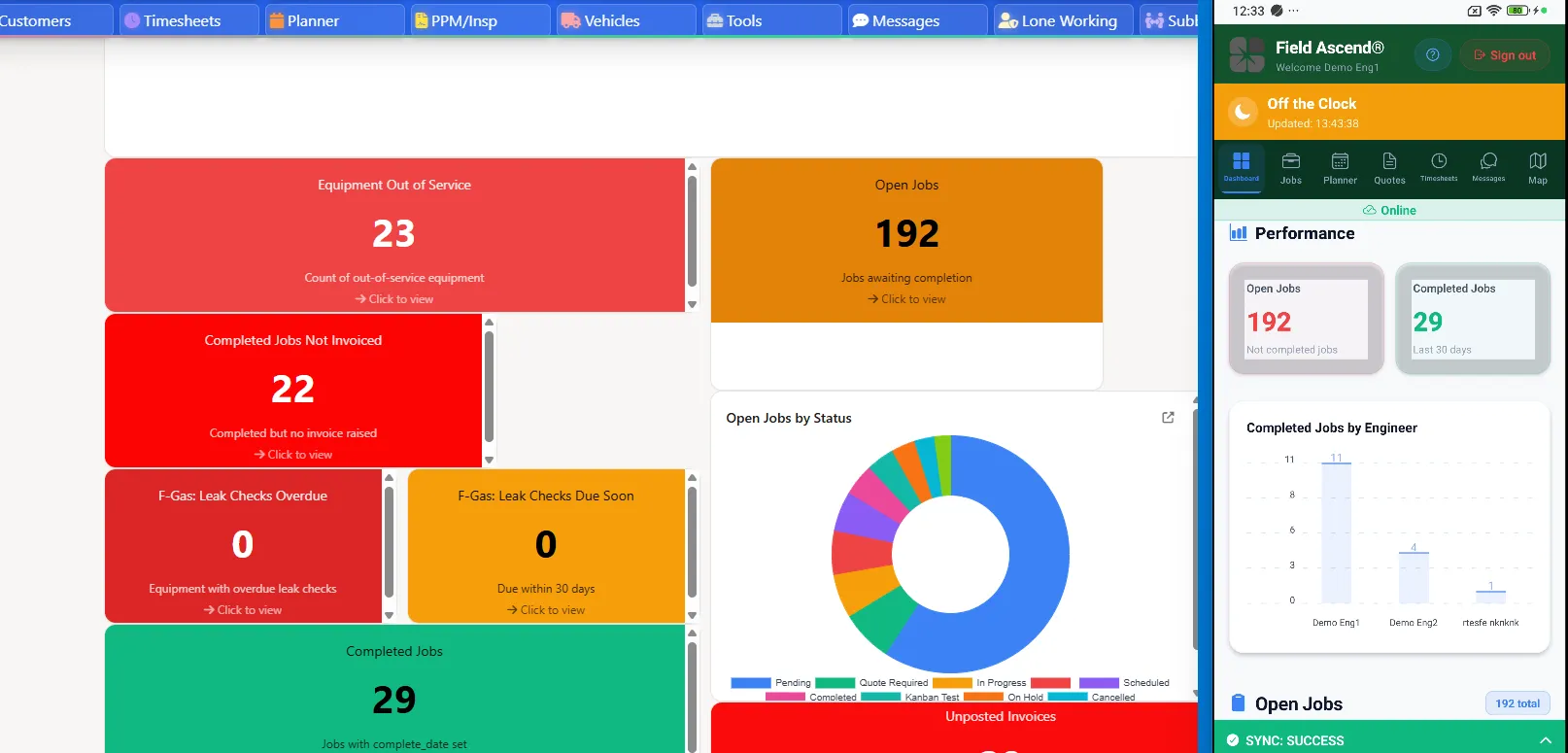
Field Ascend reporting dashboard showing job backlog, revenue timing, overdue invoices and technician utilization for a small US field service business

Owner-level visibility — backlog, billing, and technician utilization — included, not gated behind a premium tier.

What small commercial contractors usually need by the time they hit 3+ techs

This is where many "best for small business" pages miss the mark. Once the business has office plus field roles, the need is not just dispatch. It is operational control.

Work orders that turn into invoices cleanly

A small business field service software stack should reduce re-entry between what happened in the field and what gets billed.

Scheduling and dispatching that the office can actually run

That means visibility across open jobs, planned work, technician availability, and urgent callouts, not just a calendar view.

A field app that works where the work happens

The app needs to handle notes, photos, signatures, time, and job updates without forcing the tech to wait for perfect signal.

Preventive maintenance and contract visibility

For commercial contractors, recurring visits, SLAs, and service history matter early. That is why the line between FSM and CMMS matters less than buyers think.

Multi-site customer structure

Commercial customers often buy at account level but consume service at site level. The platform needs to support that cleanly before the admin overhead becomes a problem.

Reporting that helps an owner decide

Even a 5 to 50 employee contractor needs visibility into backlog, revenue timing, overdue invoices, and technician utilization. That should not require an upgrade to a premium tier.

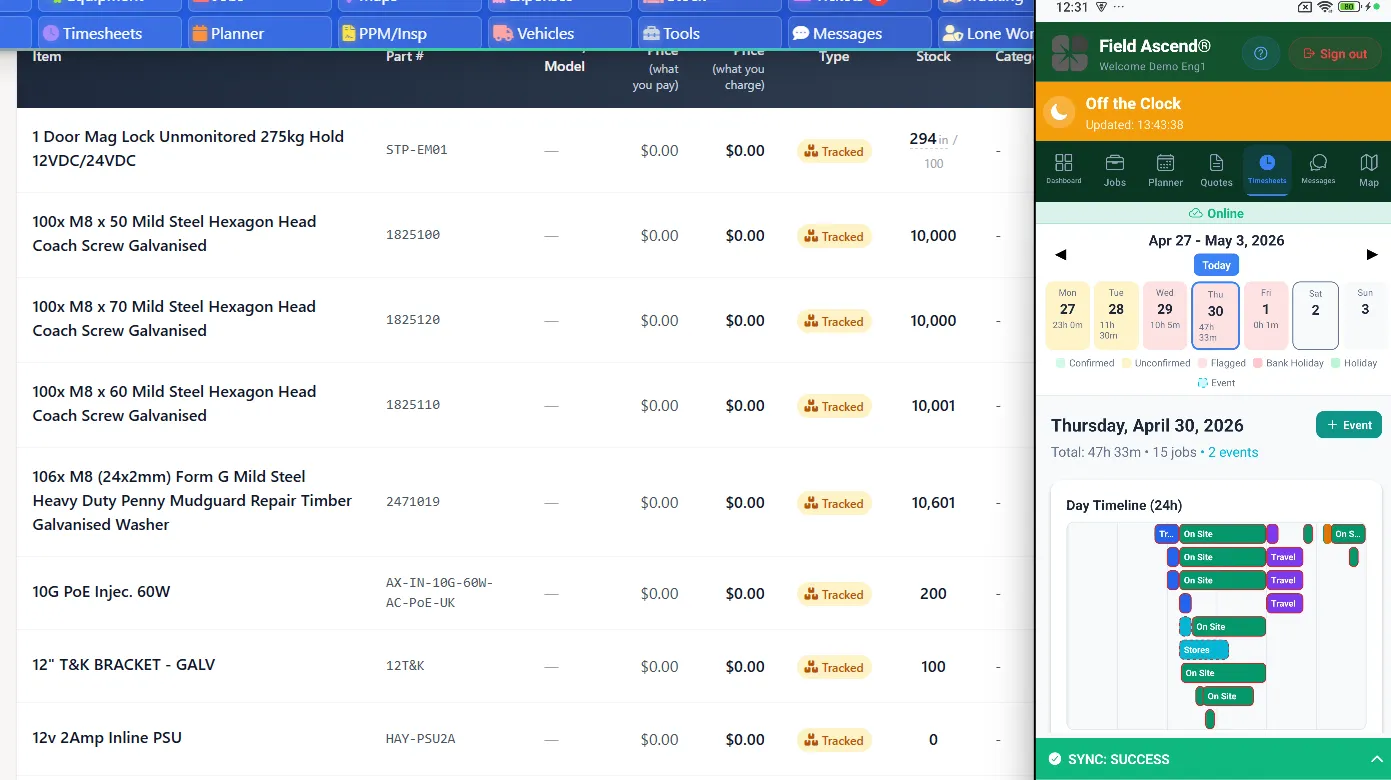
Field Ascend mobile technician app for US contractors showing work orders, job notes, photos and customer signature capture in the field

The field app captures notes, photos, signatures, and time on the job — even without perfect signal.

Leaving an enterprise FSM?

Some small and mid-sized contractors end up evaluating enterprise tools because they sound like the "serious" choice. The trade-off is that the buying process, implementation model, and long-term pricing can be built for much larger teams.

When enterprise software feels wrong-sized

If you need strong workflow coverage but not a heavy rollout, a smaller business-focused platform often makes more sense. You still get the scheduling, job, mobile, and maintenance capability you need, but without the same budget shock or onboarding overhead.

Useful next read

If your shortlist currently includes larger enterprise-first vendors, read our ServiceTitan alternative guide. It is written for commercial service businesses that need real operational depth but want to stay away from a per-tech pricing model and an enterprise implementation experience.

Trust signals for a cautious buyer

Public review volume is still early, so the source details are shown visibly below. The aggregate rating markup reflects this third-party footprint.

Independent review footprint

Last checked: April 2026. Current visible footprint: G2 5.0/5 from 1 review, Capterra 5.0/5 from 1 review, and Trustpilot 5.0/5 from 2 reviews.

G2

Rated 5.0/5
Based on 1 review

View Field Ascend on G2

Capterra

Rated 5.0/5
Based on 1 review

View Field Ascend on Capterra

Trustpilot

Rated 5.0/5
Based on 2 reviews

View Field Ascend on Trustpilot

Frequently asked questions

How much does field service software cost for a small business?

Field service software for a small business can range from under $50 per month for limited solo plans to several hundred dollars per month once you need office access, field access, reporting, or premium modules. Field Ascend is $13 per user per month with all core features included, so a 5-user team starts at $65 per month before tax. See our pricing page for the live plan.

What's the cheapest field service management software?

The cheapest FSM software is usually a solo or starter plan built for one user and a lighter workflow. That can be fine for a one-person operator, but it often stops being the right answer when the business needs dispatching, office collaboration, or recurring commercial service workflows.

Can small businesses get the same features as enterprise FSM tools?

Yes, if they choose a platform that does not hide normal workflow behind higher plans. Small businesses can still get scheduling, dispatch, work orders, mobile app access, preventive maintenance, invoicing, and reporting without having to buy an enterprise rollout.

Is there free field service management software?

There are free or very low-cost options, but they are usually limited by user count, monthly jobs, or missing features. A trade business with office plus field roles usually outgrows those plans quickly, which is why many buyers prefer a low-friction paid option with clear pricing instead.

What's the difference between FSM and CMMS for small business?

FSM is broader: scheduling, dispatch, work orders, field updates, customer communication, and invoicing. CMMS focuses more on maintenance planning, asset history, and preventive maintenance. Small commercial contractors often need both, which is why Field Ascend combines the two workflows inside one platform.

See the small-business plan clearly

If you are comparing software for a 3 to 50 person service business, start with the pricing page. It shows the model plainly: $13 per user, all features included, and no setup fee.

See U.S. Pricing